Rpnunyez
D O C U M E N T A R Y P H O T O G R A P H Y
F11 Full Screen
Turkey A secular republic under the shadow of the minaret | Rpnunyez
TÜRKIYE A secular republic under the shadow of the minaret. VOL I & VOL II


I. ANKARA

Since Mustafa Kemal Atatürk established Ankara—then a small town of 15,000 inhabitants—as the nation's capital in October 1923, the fate of the city and that of the Republic have remained inextricably linked...
II. REPUBLIC

Every 10th of November at 9:05 am—the exact day and time of Mustafa Kemal Atatürk’s death in 1938—the nation of Türkiye comes to a standstill for a minute’s silence to remember and pay tribute to the Father of the Nation..."
There is no better symbol of modern-day Türkiye than Anitkabir.
III. ISTANBUL. The infinity city.
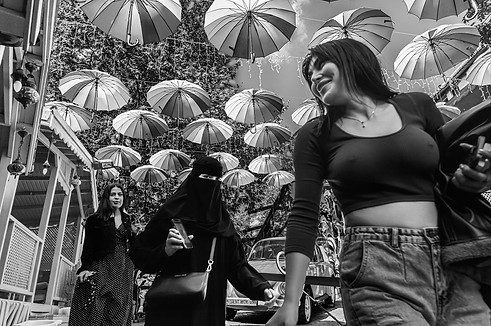
Istanbul is a city of cities. Its neighbourhoods have their own idiosyncrasies, but also their own ideologies. Whether wearing an abaya, hijab, niqab, a miniskirt, a low-cut top, or leaving one's hair uncovered...
This is Istanbul: a neighbourhood, a city.
IV. URFA. The welcoming city.
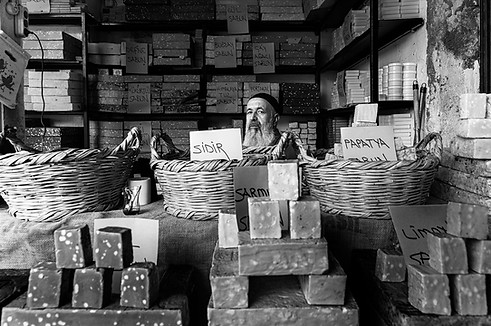
Urfa is a peaceful city in south-eastern Anatolia, mostly Kurdish, enveloped in equal parts in myths, legends, and irrefutable history."
The locals say that Abraham himself was born in the cave that is venerated here...

V. MOSQUE

The mosques are known, without exception, for the patrons who promoted their construction.
The great forgotten are their architects, from Mimar Sinan
...But their works, with their beauty of shapes and colours, their exquisite symmetries, their enormous. stylised minarets and their way of playing with the light outside, are nothing but an elegant homage to the universal language of mathematics.
VI. EZAN

The ‘ezan’, the most ‘visible’ feature of any Muslim country, is only the tip of the iceberg that shows a way of living, a way of understanding life.
But in Istanbul, the city of seven hills, it is more than that: especially during the 4th prayer called ‘Maghrib’, the moment becomes magical...
VII. MEVLEVI

Islamic Sufi theologian and scholar, Jalal-ud Din Mohammed, also known as Mevlana or Rumi, is one of the greatest mystical poets of all time...
Seven centuries after his death, his legacy, his teachings of tolerance and respect for others regardless of their condition, live on through the lives of the Mevlevi.
VIII. SEMA

Seven centuries later, the soft sound of a flute, called ney, initiates every Sema ritual. From it comes the “Hu” which symbolises the insufflation of the divine breath into the human being...
At the climax of the ritual it is all hypnotic, beautiful, electrifying
SYNOPSIS
In this photographic project, Rpnunyez invites us to take an intimate and reflective plunge into the complex identity of Türkiye, a country marked by the duality of the radical secularism promoted by M. K. Atatürk and its deep Islamic roots...
More than simply describing places, the author immerses himself in them to capture the shared human experience that goes beyond cultural, political or religious differences. Far from being a tourist postcard, the work offers a philosophical and existential dimension that transcends classic documentary photography, exploring the many facets that make up everyday life and history through an honest, non-judgmental perspective, far removed from the most predatory photojournalism and in line with the humanism of the Magnum agency.
INTRO
In southeastern Anatolia near the biblical Euphrates River, just a few kilometres from Urfa, a city awash with myths and legends, lies the archaeological site of Gobekli Tepe.
Gobekli Tepe is the oldest known human-built place of worship, dating back to 10,000 BC and which is forcing archaeologists and historians to rewrite history.
Almost 500 km away, on Atatürk Boulevard in Ankara, in central Anatolia, the Melike Hatun Mosque, inaugurated in 2017, is another place of worship that fascinates with its perfect symmetry, its dazzling white marble and its unbeatable and mesmerising set of interior vaults.
These, schematically, could represent the two ends of Türkiye's timeline, a timeline full of historical events that have shaped the Turkish nation as we know it today.
But understanding present-day Türkiye would require the addition of ,at least, one fundamental fact to that time line.
In the Çankaya district of the capital, Anitkabir stands upon a hill overlooking the entire city. Its colossal dimensions, its slender columns of perfect straight lines and its exquisite design preserving traces of Hittite, Greek, Seljuk and Ottoman cultures perfectly symbolise modern-day Türkiye. There lie the remains of, and there, homage is paid to the revered father of the nation, Mustafa Kemal Atatürk, who 101 years ago transformed the country into the only Muslim-majority country in the world to be established as a secular republic - a secular republic, however, under the shadow of the minaret.
ANKARA 30th October 2024
FOREWORD 1 | Melanie Meggs
When I first encountered the work of Rpnunyez in 2022, I knew instinctively that his vision was different. It was not only the strength of his photographs that moved me but also his words: “We can differentiate ourselves by race, color, language, wealth and politics, but consider what we have in common...we all bleed red.” In those last four words I understood the heart of his practice. His photography is never about categories or divisions. It has always been about the shared pulse of human life.
Through our close dialogue over the years on The Pictorial List, my admiration for his work has deepened, as has my respect for the photographer he is.
Rpnunyez is a photographer who approaches his subjects with honesty and integrity. What stays with me is not only the photographs themselves, but the values that make them possible. They encourage us to look closely, to think critically, and to recognise ourselves in the lives of others. He is guided by the conviction that a photograph should not extract or reduce, but allow another’s presence to be seen.
In this way, his work reveals not only the face of a person, but something of their inner life, something of the country they inhabit.
Türkiye Volume I is not only a portrait of a country but also a reflection on how societies live with complexity, negotiating between past and present, belief and secularism, continuity and change.
In Ankara, silence gathers each November at Anitkabir, where the memory of Atatürk still halts a nation in collective pause. In Istanbul, the streets reveal competing ways of life, where the call to prayer rises above trams, markets, and modern cafés. In Urfa, the story of Abraham endures at the sacred pond of carp, where families feed the fish as children play nearby. The photographs show how individual lives and collective history intersect in daily practice.
In these pages, Türkiye appears both singular in its particulars and universal in its questions, reminding us that the truths of a nation are inseparable from the lives of its people.
To open this book is to step into that recognition.
Here, Türkiye is not explained. It is lived.
Melanie Meggs
Cofounder and Creative Director, The Pictorial List. Australia.
FOREWORD 2 | Mayte Muro
There are countries that defy categorisation, that cannot be easily described, that seem to exist in a fragile balance between opposing forces. Türkiye is one of them. A secular republic that coexists, day after day, under the shadow of the minaret. A land where modernity and tradition are not mutually exclusive, but rather face each other in an endless dialogue.
It is in this maelstrom of contrasts that Rpnunyez's work takes on its full meaning. He is not a photographer who seeks artifice or pleasant postcards. A man of science and an atheist, he has decided to explore the most uncertain terrain in this book, capturing with his camera what underlies, what beats at the heart of the human experience. His images are not mere snapshots, but visual explorations of universal truths that challenge us all.
In these pages, Türkiye is presented to us in all its complexity. We see the moving bodies of the Dervishes, spinning and spinning until they brush mystery. We hear, through the image, the echo of a minaret rising above the city like a spiritual beacon. We perceive the tension between respect, tolerance and freedom, facing the force and aggression that sometimes emerge from the same root.
Rpnunyez understands that photography is not merely a document: it is a gateway to shared human experience. Often, his images are emotional maps that remind us that faith —whether practised or denied— is a strength that shapes us, that accompanies us even when we believe we have left it behind. When we look at his photographs, we find ourselves looking inward as well.
I admire how this work is capable of building bridges. Between East and West. Between the sacred and the profane. Between the individual and the collective. Each image becomes a meeting place, a space where the strange becomes familiar and the everyday takes on a new shine.
Ultimately, this book is not just a journey to Türkiye. Above all, it is a journey into humanity. Into that part of ourselves that seeks meaning, that questions beauty, faith and mystery. And on that journey, Rpnunyez's vision guides us with respect and determination, reminding us that true photography does not freeze time: it makes it eternal. BACK
Mayte Muro
Editor-in-Chief of SYMART MAGAZINE. Spain.